

[vc_row][vc_column width=”1/4″ woodmart_sticky_column_offset=”50″ woodmart_css_id=”66fc590d8b224″ parallax_scroll=”no” woodmart_sticky_column=”true” wd_collapsible_content_switcher=”no” wd_column_role_offcanvas_desktop=”no” wd_column_role_offcanvas_tablet=”no” wd_column_role_offcanvas_mobile=”no” wd_column_role_content_desktop=”no” wd_column_role_content_tablet=”no” wd_column_role_content_mobile=”no” mobile_bg_img_hidden=”no” tablet_bg_img_hidden=”no” woodmart_parallax=”0″ woodmart_box_shadow=”no” responsive_spacing=”eyJwYXJhbV90eXBlIjoid29vZG1hcnRfcmVzcG9uc2l2ZV9zcGFjaW5nIiwic2VsZWN0b3JfaWQiOiI2NmZjNTkwZDhiMjI0Iiwic2hvcnRjb2RlIjoidmNfY29sdW1uIiwiZGF0YSI6eyJ0YWJsZXQiOnt9LCJtb2JpbGUiOnt9fX0=” mobile_reset_margin=”no” tablet_reset_margin=”no” wd_z_index=”no” css=”.vc_custom_1727813908735{margin-bottom: 15px !important;}”]
[/vc_column][vc_column width=”1/2″][woodmart_text_block woodmart_css_id=”6a3fef5b17090″ woodmart_inline=”no” responsive_spacing=”eyJwYXJhbV90eXBlIjoid29vZG1hcnRfcmVzcG9uc2l2ZV9zcGFjaW5nIiwic2VsZWN0b3JfaWQiOiI2YTNmZWY1YjE3MDkwIiwic2hvcnRjb2RlIjoid29vZG1hcnRfdGV4dF9ibG9jayIsImRhdGEiOnsidGFibGV0Ijp7fSwibW9iaWxlIjp7fX19″ parallax_scroll=”no” wd_hide_on_desktop=”no” wd_hide_on_tablet=”no” wd_hide_on_mobile=”no” title_decoration_box_shadow=”eyJkZXZpY2VzIjp7ImRlc2t0b3AiOnsiaG9yaXpvbnRhbCI6IjAiLCJ2ZXJ0aWNhbCI6IjAiLCJibHVyIjoiMCIsInNwcmVhZCI6IjAiLCJjb2xvciI6IiJ9fX0=”]How will this decade be remembered? Musically, it’s unclear. In this special two-part report, Gabriel Szatan examines the forces fragmenting electronic culture today, and where we might go next.[/woodmart_text_block][woodmart_text_block woodmart_css_id=”6a3feffdc5931″ woodmart_inline=”no” title_decoration_box_shadow=”eyJkZXZpY2VzIjp7ImRlc2t0b3AiOnsiaG9yaXpvbnRhbCI6IjAiLCJ2ZXJ0aWNhbCI6IjAiLCJibHVyIjoiMCIsInNwcmVhZCI6IjAiLCJjb2xvciI6IiJ9fX0=” responsive_spacing=”eyJwYXJhbV90eXBlIjoid29vZG1hcnRfcmVzcG9uc2l2ZV9zcGFjaW5nIiwic2VsZWN0b3JfaWQiOiI2YTNmZWZmZGM1OTMxIiwic2hvcnRjb2RlIjoid29vZG1hcnRfdGV4dF9ibG9jayIsImRhdGEiOnsidGFibGV0Ijp7fSwibW9iaWxlIjp7fX19″ parallax_scroll=”no” wd_hide_on_desktop=”no” wd_hide_on_tablet=”no” wd_hide_on_mobile=”no”]There Is No Sound of the 2020s. Yet.
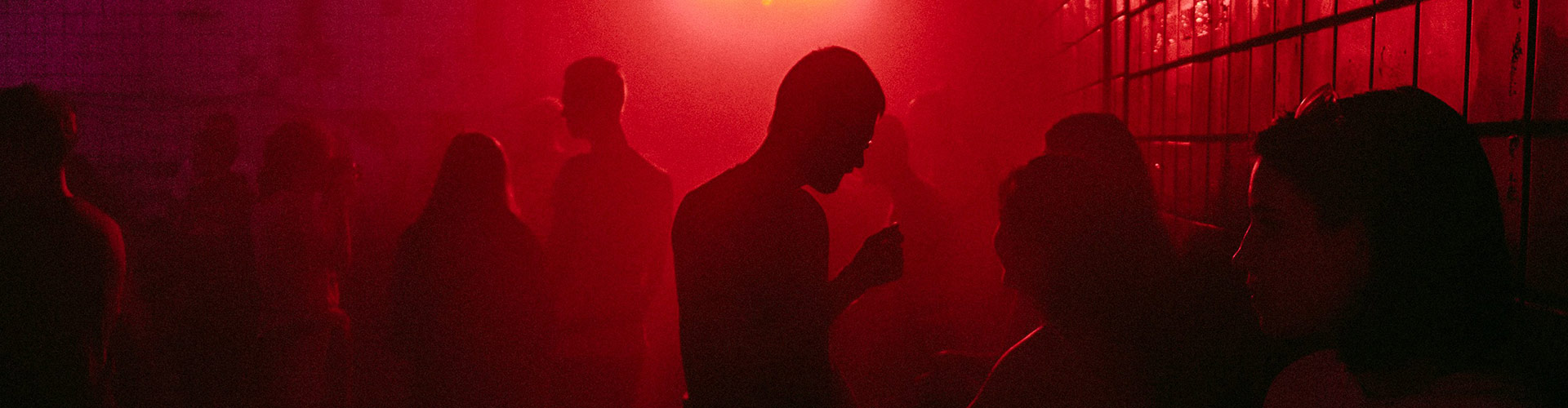
Earlier this year, I spent an entire night drifting around a very prominent club stacked with very prominent DJs, and I felt nothing.
On paper, the bill was strong: a mix of veterans and breakthroughs from different generations, including several outright stars in their field. But by some deadening alchemy, the sets smushed into a homogenous paste, largely indistinguishable in tempo and tone. At one point, you could make out a pinched expression on the headliner’s face as she struggled to connect with the crowd. The main room shut hours ahead of schedule, a rare sight witnessed by just a dozen or so stragglers under cold, bright lights. I couldn’t help but think, “Uh oh, the party might be over.”
If it was an outlier, it could be written off, but I can count multiple times over the last year that I’ve felt some version of that same restlessness, or that it bounced around conversation as a hot topic. Perhaps you’ve felt it too. No matter the soundtrack, the feeling echoed: this is good, not great. The lightning-in-a-bottle effect that animates club culture seems to be in hibernation and it’s not just hampering nights out, either. As of late, electronic releases seem to exist on this same endless plateau. We have more music to enjoy than ever, but what’s increasingly nagging at me is that this overfamiliarity is actually the problem.
Every facet of our digital and physical existence nudges us towards more of the same: streaming platforms optimised for continuity, algorithms trained on our biases, expensive nights out that block many from rolling the dice on a different experience, festivals dictated by market logic. Accordingly, the space for novel sounds to lay down roots is being crowded out.
The problem of disposability is hammering entertainment across the board, but isn’t music meant to inspire a deeper connection? Although it’s ugly to admit, faced with a wall of unopened promos, glossed-over notifications and albums that seemingly evaporate after first contact, music has become prone to throw-it-on-the-pile-itis.
Electronic culture finds itself in a strange double condition: hyper-fragmented in theory, yet consensus-driven in practice. What used to feel like solid land has given way to an archipelago of disparate scenes with little awareness of their neighbours and, broadly, only slight modifications to preexisting sounds. That suits the already keyed in, but it makes following the underground hard work and locks out younger listeners who bring the fresh perspectives culture is crying out for.
The only real connective thread is that everyone is pummelled by the same financial and technological headwinds, ones that not only trap creativity but strip away the energy needed to stay curious. The radicalism underpinning sharp art and the patient listening to appreciate it usually sit downstream of beneficial conditions, and as those conditions— cheap rent, functioning welfare, personal liberties, self-sufficient independent nightlife— are being withdrawn simultaneously, the precarity becomes more acute.
Static progression and low conversion rates for young listeners are bad enough. But so far, the 2020s have failed to produce a new sound that has reached anything like a mass audience and that’s another existential problem in the making.[/woodmart_text_block]
[/vc_column][vc_column width=”1/4″][/vc_column][/vc_row]